
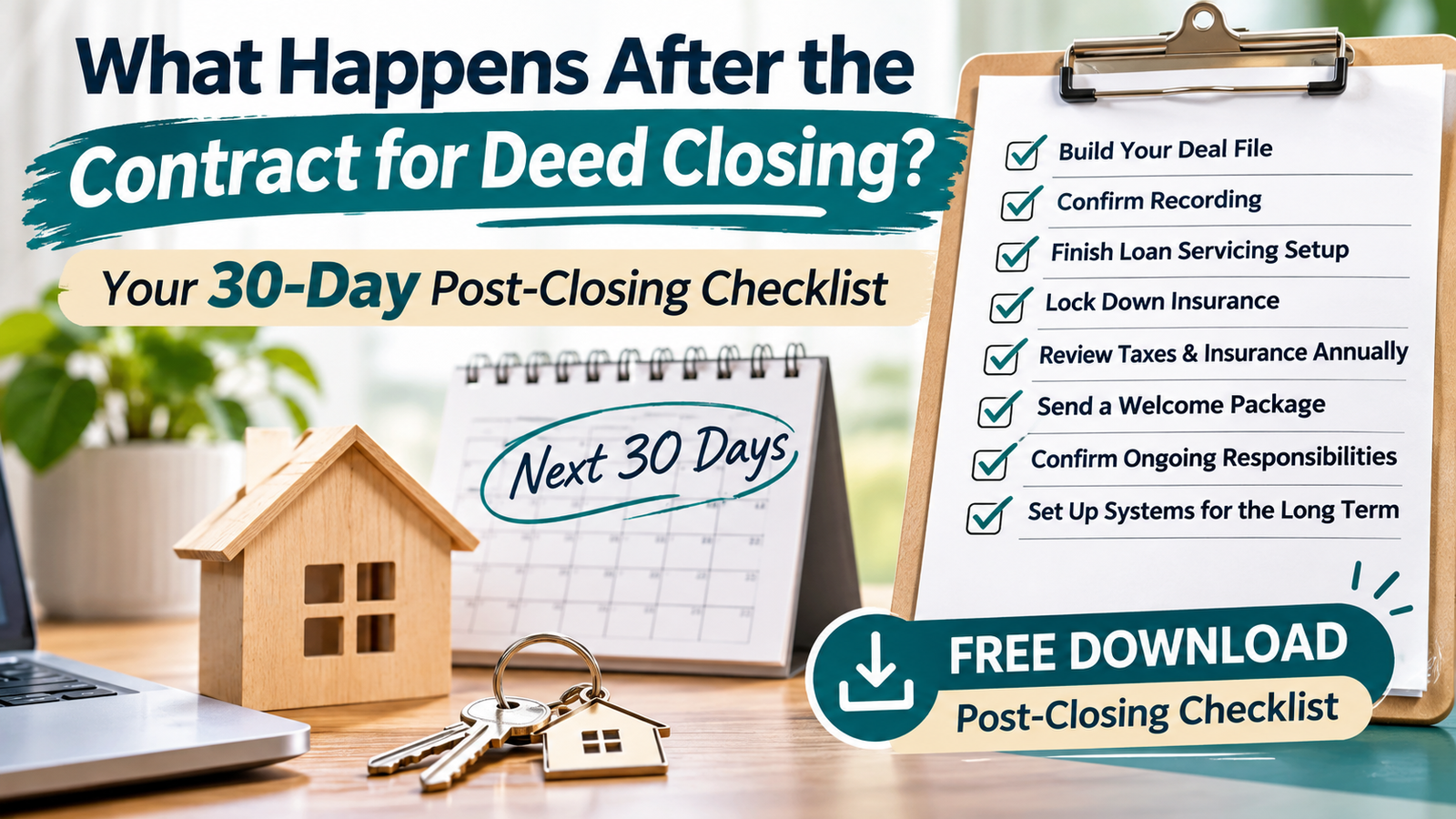
The papers are signed. The buyer has the keys. You’re ready to chase the next deal.
Hold that thought.
Closing isn’t the finish line. It’s day one of managing your owner-financed investment.
The next 30 days set the tone for years of payments. Get your documents, recording, servicing, insurance, and tax tracking in place now, and every deal after this one gets easier.
Free download: Grab the 30-Day Post-Closing Checklist and follow along.
1. Build Your Own Deal File
Don’t count on the title company or attorney to hold the only copy of your documents. Keep your own complete file, including:
- The executed contract for deed, plus all addendums and amendments
- Closing or settlement statement
- Promissory note or related financing documents
- Disclosures and insurance documentation
- Payment and amortization schedules
- Buyer contact information and recording receipts
Investor tip: Create a digital folder for every property. You’ll thank yourself the day a buyer asks for paperwork or you need a payoff statement.
2. Confirm Recording Actually Happened
Signed doesn’t mean recorded. Depending on your state and deal structure, certain documents may need to be filed with the county.
Ask your title company or attorney which documents were submitted and when, whether the county accepted them, and what the recording or instrument numbers are. Save the recorded copies in your deal file.
3. Finish Your Loan Servicing Setup
Here’s the catch: your loan servicing company should be chosen before closing, not after.
Picking a servicer early gives you time to walk them through the deal structure, confirm the documents they need, and agree on how principal, interest, taxes, and insurance will be tracked.
A professional servicer handles payment collection, allocations, late payments, buyer statements, balances, and year-end reporting. The money moves through a neutral third party with a clean paper trail, not through your personal bank account.
After closing, send the servicer any remaining paperwork they request. Then, before the first payment is due, confirm:
- The servicing account is active and the payment terms are correct
- Your tenant buyer has payment instructions
- The servicer is ready to process payments
4. Lock Down Insurance Coverage
As the investor, you buy the property insurance policy and build the premium into the tenant buyer’s monthly payment. A solid setup looks like this:
- You purchase, maintain, and stay on the policy
- The tenant buyer is listed as an additional insured, when the policy allows
- All claims go through you
- The tenant buyer carries separate renter’s insurance
Don’t assume a standard homeowner’s or landlord policy covers a contract for deed. Review it with an insurance agent who understands these deals, and check coverage at every renewal.
5. Review Taxes and Insurance Every Year
Property taxes go up. Premiums change. If you estimate once and never look again, you’ll eventually come up short.
Run an annual escrow analysis on every property:
- Pull current property tax information from the county.
- Verify the current insurance premium.
- Compare the combined cost to what’s collected through the monthly payment.
- Send any payment change to your loan servicing company.
- Give the tenant buyer proper notice.
Here’s how fast it adds up: if taxes rise $240 a year and insurance rises $360, that’s an extra $50 a month you need to collect. Check your contract and state requirements before changing the payment.
6. Send a Welcome Package
Within the first few days, send your tenant buyer:
- A copy of the signed contract
- Payment amount, due date, and servicer contact information
- Insurance and renter’s insurance requirements
- How taxes and insurance are built into the payment
- Maintenance responsibilities and who to call with questions
A clear start prevents a lot of confused phone calls later.
7. Update Your Books
Record the purchase price, closing expenses, down payment, outstanding balance, payment breakdown, and actual tax and insurance bills. Keep separate records for each property, and reconcile what’s collected for taxes and insurance against what you actually paid.
Ask your tax professional about installment-sale reporting, interest income, and basis recovery.
8. Plan for the Payoff Now
Your buyer may pay for years before the contract is satisfied. Your servicer’s payment history and balance become the backbone of that payoff, so keep them accurate.
Depending on the contract and state law, payoff may mean preparing and delivering a deed and recording documents. Work out that process with your attorney or title company long before the final payment arrives.
Set up your post-closing process before the closing table, not after the first missed payment.
Want the full version? The free 30-Day Post-Closing Checklist turns all eight steps into a fill-in-the-blank worksheet you can use on every property.
Get Your Free 30-Day Post-Closing Checklist
Day-by-day tasks, a deal file checklist, and an annual escrow worksheet. Fill it in, save it, and use it on every deal.
Final Thoughts
Successful owner financing isn’t just about closing deals. It’s about having a reliable process for managing them once the buyer has the keys.
The sooner your systems are in place, the fewer problems you’ll have to fix later.
Choose your servicer before closing, keep the right insurance in place, review escrow every year, and keep clean records for every property.
At Turnkey TC Solutions, I keep contract for deed transactions organized from contract to close, coordinating with title companies, attorneys, and loan servicers so servicing is ready on day one.
Ready to protect your next deal after closing? Download the free 30-Day Post-Closing Checklist.
Disclaimer: This article is for educational purposes only and is not legal, tax, or insurance advice. Contract for deed requirements vary by state. Consult qualified professionals about your specific transaction.
Leave a Reply